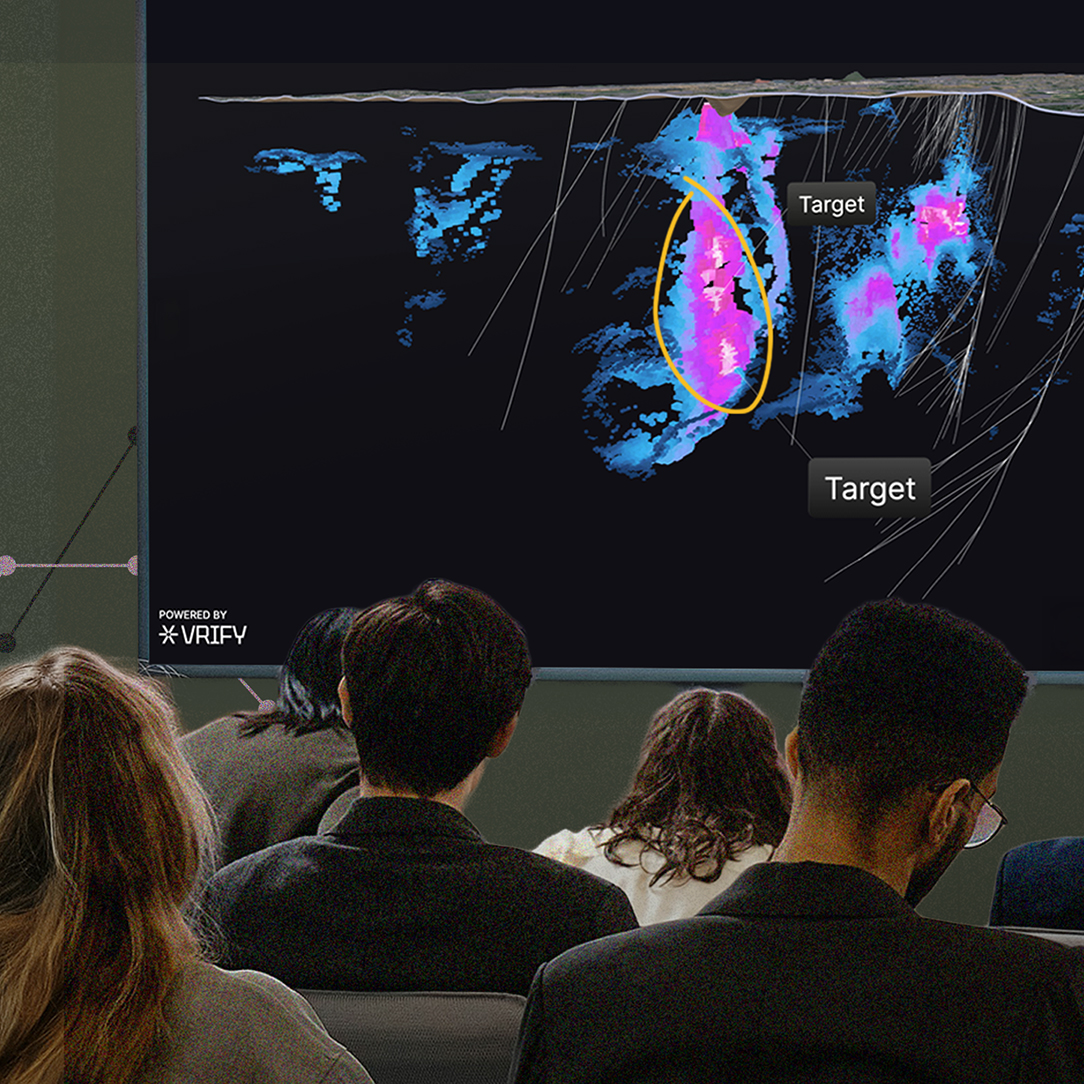
A renewed commodities cycle has brought fresh capital back into mineral exploration, while the global energy transition continues to intensify demand for new mineral and metal supply. Alongside these market forces, another has been steadily gaining traction: AI.
In response, companies and their leaders are taking a harder look at how capital and resources are deployed, particularly when it comes to improving exploration outcomes. Much like other industries, advances in AI tooling and a growing number of peer success stories have pushed the technology from theoretical application to practical adoption in exploration.
Despite the momentum, applying AI in a meaningful way remains far from straightforward. It is not always clear where it fits or how quickly it can deliver real value. Layer in a growing wave of low-quality or overhyped “solutions,” and the challenge becomes even more pronounced.
For exploration leaders, this complexity makes discernment critical. Understanding the opportunity is one thing. Acting on it requires a clear examination of the considerations that can lead to AI adoption success.
Consideration 1: Decision-Making
First and foremost, AI should be evaluated against the actual decisions that shape your exploration strategy.
In exploration, decision-making often comes down to what you can draw from the data and how quickly you can act on it. AI is worth considering when it meaningfully improves either outcome. That could mean surfacing stronger targets so you can move higher-potential opportunities forward, or delivering a faster “no” where the data does not support further investment.
AI delivers the most value when it helps you reach a conclusion your current process would otherwise miss or take too long to reach.
Consideration 2: Data Readiness and Expectations
Next, look at the information AI would be working from. Your data does not need to be complete to be useful, but you do need to understand the condition it is in before setting realistic expectations for the output.
Your first step may be bringing scattered project data into one integrated view. This work has value before any AI model is applied. It shows what kind of analysis the existing data can support and where it may constrain the result, without requiring you to wait until every dataset or file is perfect.
A smaller dataset can still be meaningful when reviewed in the right context. This information can enable an AI model to surface a stronger area of interest or show where additional data collection would make the next interpretation more useful.
The clearer your understanding is of the data you have, the more confidently you can interpret and act on the output.
Consideration 3: Trust and Transparency
AI adoption has to be credible to the people responsible for technical risk.
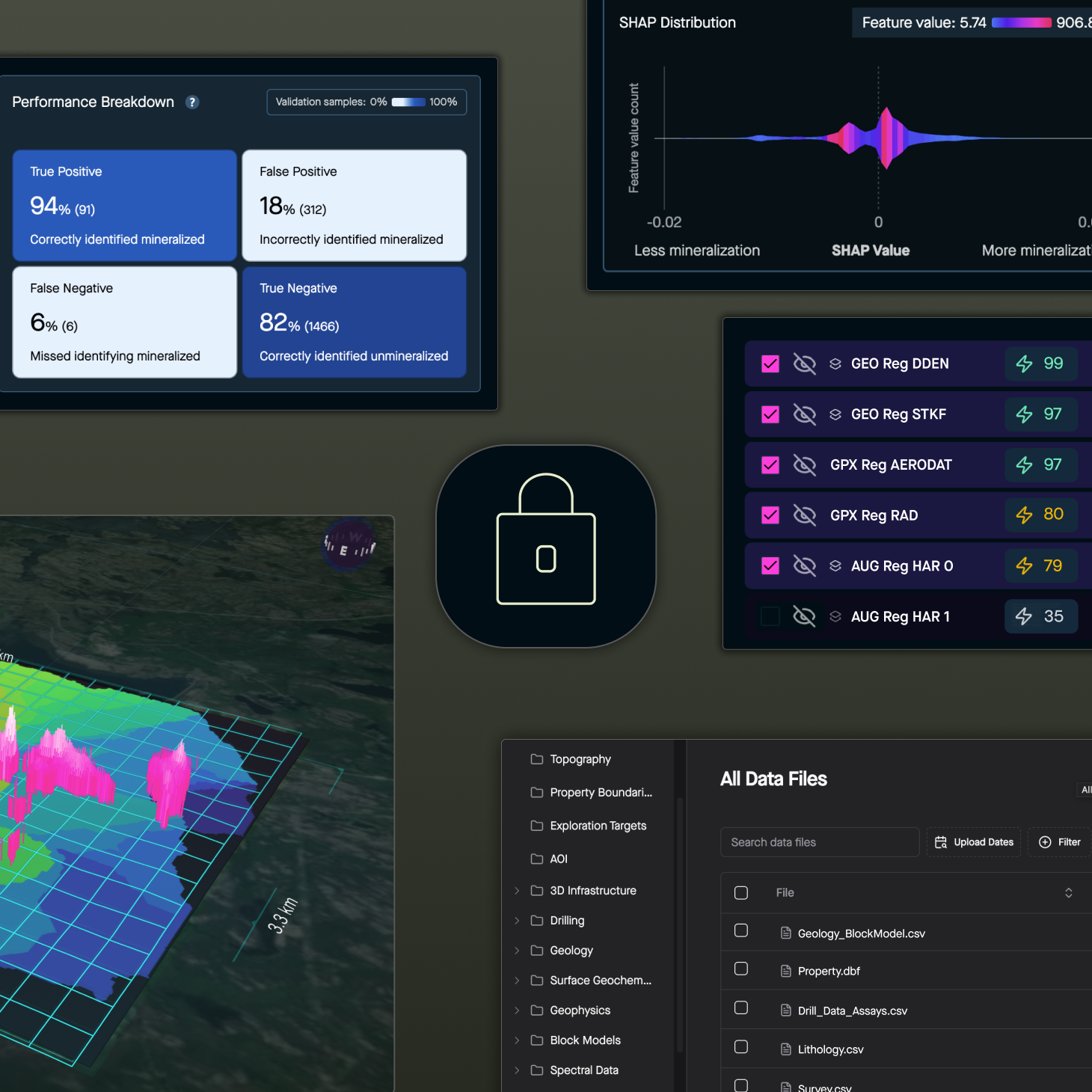
A result may look compelling, but it will not carry weight if your geologists cannot understand the basis for it. Technical teams are being asked to use AI outputs in decisions that affect budget and exploration direction. A target on a map is not enough. They need enough visibility into how the result was produced to judge whether it deserves confidence.
Not all AI systems make that review easy. Generic models yield outputs that are often difficult to trace back to geological reasoning, whereas AI systems built specifically for mineral exploration make the connection explicit. When the workflow is transparent, your technical team can evaluate AI as part of the existing process rather than being asked to accept the output on faith.
Consideration 4: Data Risk
Exploration data carries strategic value. Before incorporating AI into your workflow, you need to understand how your proprietary information is handled and whether the conditions of its use align with your internal risk and compliance requirements.
Look for plain language on whether your project data stays within your account and whether any information is used in anonymized or aggregated form outside of your own work. The same clarity applies to the security or compliance standards in place, including any formal designations.
When these aspects are explained directly, you have a stronger basis for evaluating their AI system with confidence.
<hr />
AI adoption in exploration should not be driven by industry momentum alone. The stronger test is whether the technology improves the decisions that shape your strategy and produces results your geoscience team can trust. This assessment also needs to reflect the condition of your data and the terms under which proprietary information will be used. With this clarity, you can judge AI on practical value and move forward when it supports the way your exploration program actually works.
To better understand what adopting AI tools like DORA, part of the VRIFY Predict suite, could look like in your company’s exploration workflow, book a demo with our Geoscience Team.
.png)

.png)

.png)



.jpg)

.png)