Australia is one of the world's most established mining jurisdictions and a global leader in mineral exploration. This, combined with a workforce of talented technical experts, has made the continent a key market for both exploration innovation and technology adoption.
For VRIFY, Australia was a natural place to expand beyond Canada. The first Australia-based employee joined VRIFY in 2024, and the Perth office opened later that year. Since then, investment into growing the Australian team and client base has accelerated significantly.
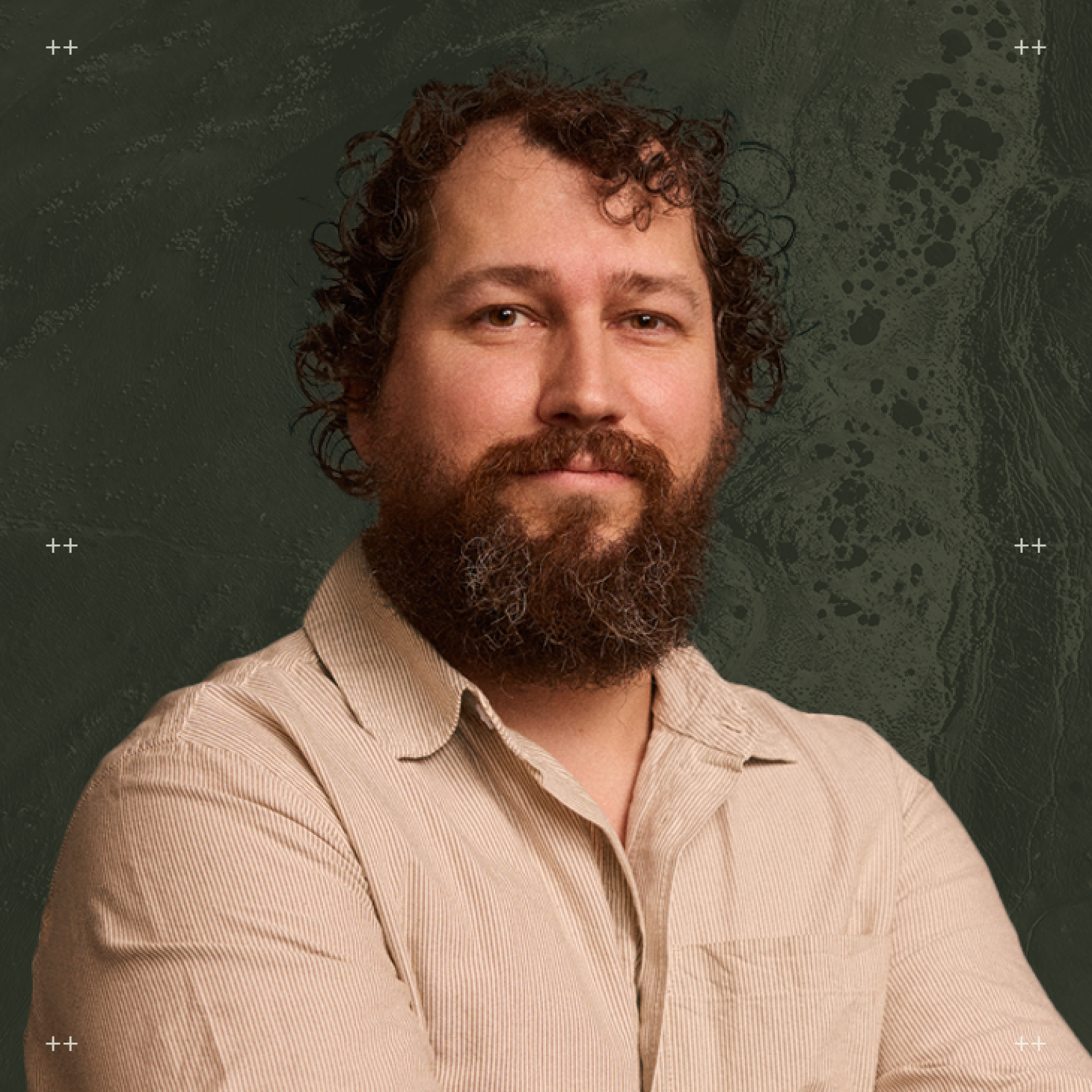
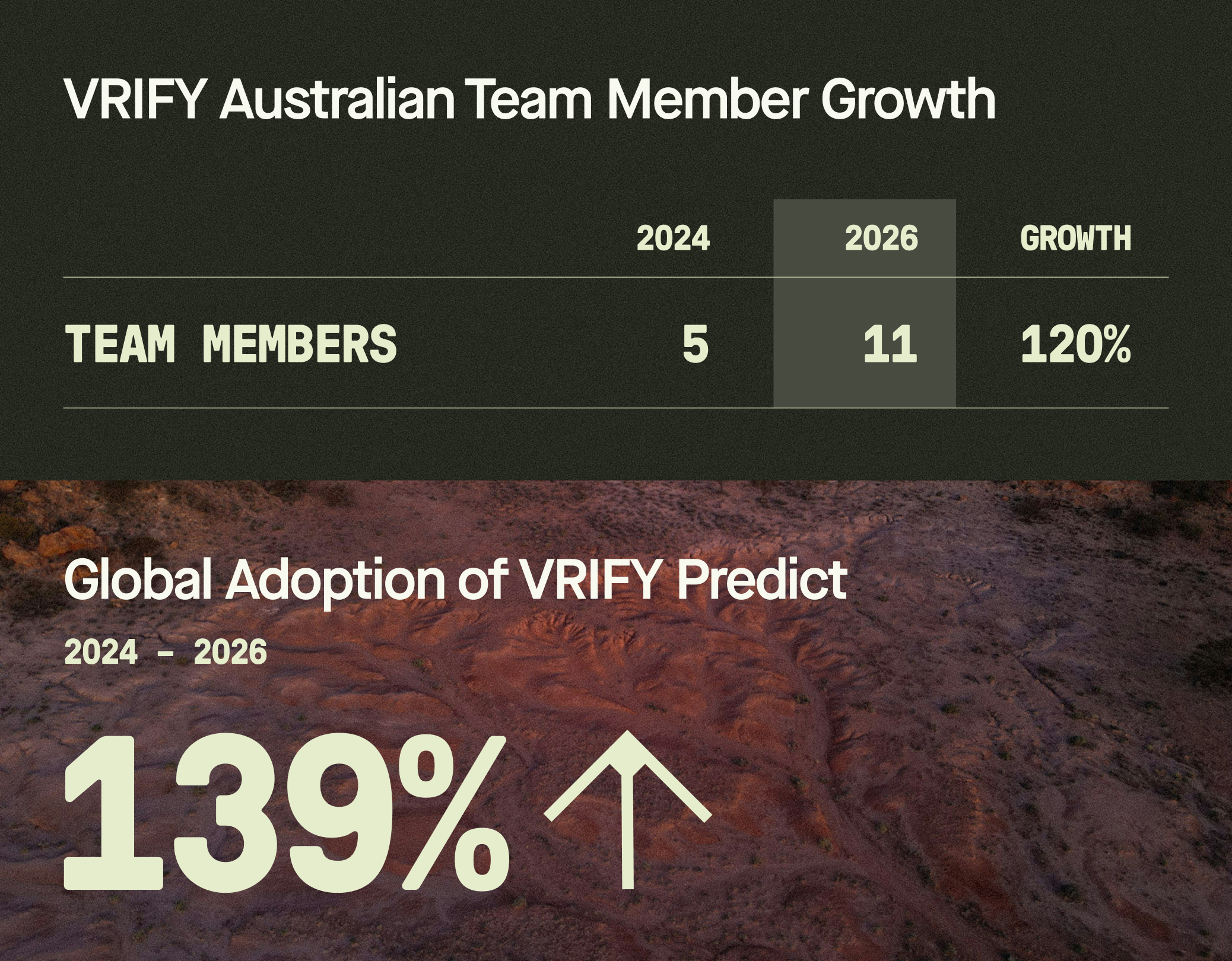
In the first two years, VRIFY's Australian team expanded from five employees to eleven, while adoption of VRIFY Predict increased globally by 139%. During this same period, VRIFY's client base grew by 22% and the company's global team expanded from 96 to 140 employees, including the geoscience team expanding from eight to 21 experts. Behind these numbers are the people helping shape the future of mining and mineral exploration, including geoscientist Weronika Gorczyk, whose journey from academia to exploration technology reflects both VRIFY's growth in Australia and the broader evolution of the industry.
From Academia to Technology
For Weronika, her career in geoscience began with curiosity about the natural world. Growing up in Poland, she developed a love for the outdoors, which led her to field excursions in the mountains of southern Poland where she was introduced to geology. This experience eventually led her to complete a Master's degree in Geology at Jagiellonian University before earning a PhD in Geodynamics from ETH Zurich. Throughout her career, Weronika has worked across structural geology, geological modelling, mineral systems, and collaborative industry-academic research projects.
After completing her studies, Weronika set her sights further afield and moved to Australia where she found herself working within one of the world's most dynamic exploration environments. Exposure to Australia's mineral systems and highly technical geoscience community helped shape her perspective on how academic knowledge can be applied to real-world discovery. These experiences sparked a growing interest in how emerging technologies could help geologists extract greater value from data and improve exploration processes.
Joining VRIFY
After spending much of her career in academia and research, Weronika was looking for an opportunity to apply her geological thinking more directly to real-world exploration challenges. The transition to VRIFY represented a chance to combine scientific expertise with technologies that are transforming how exploration teams evaluate opportunities and make decisions.
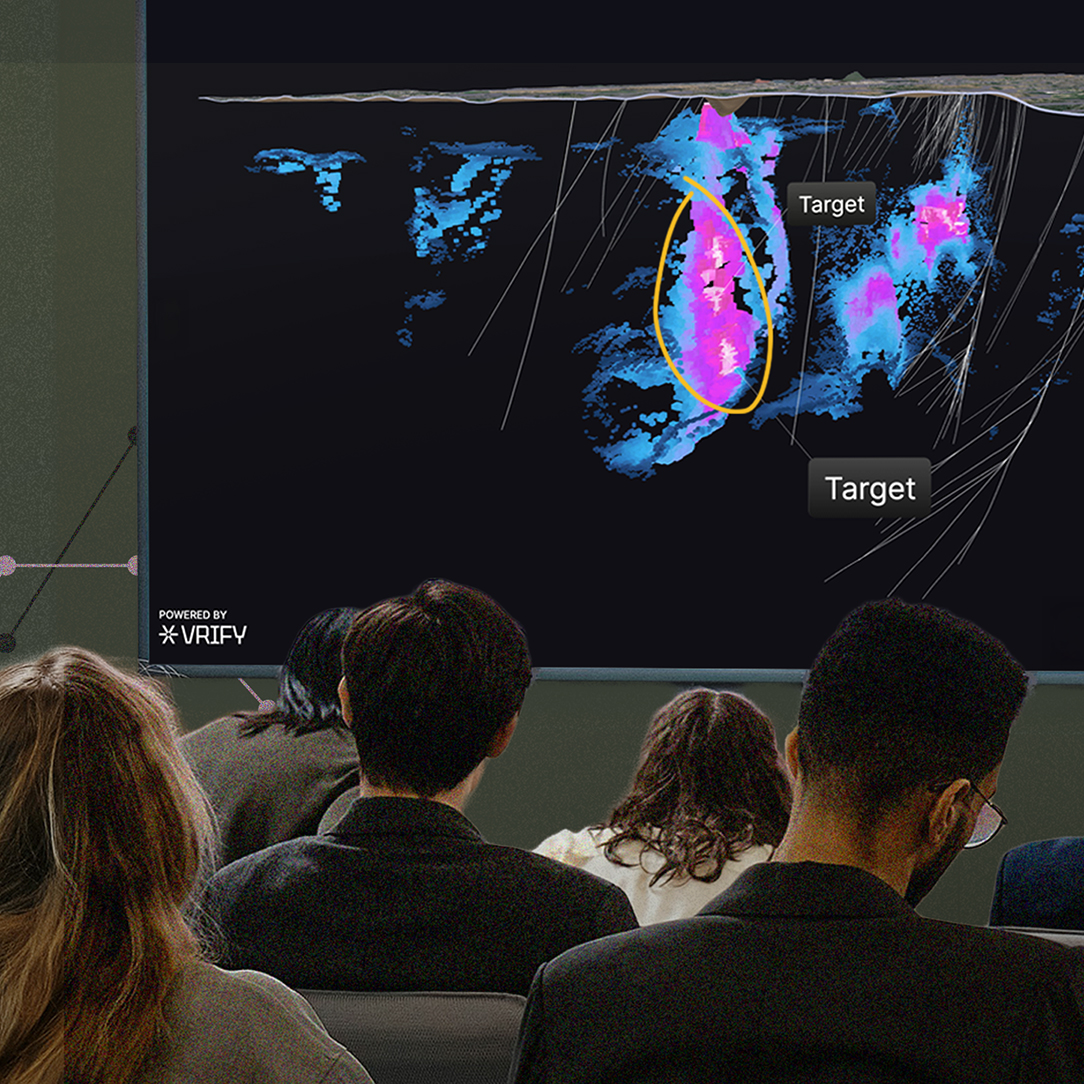
What stood out most to Weronika was the ability to work at the intersection of geology, artificial intelligence, and large-scale data integration. As exploration datasets continue to grow in size and complexity, AI technologies like DORA, part of the VRIFY Predict suite, provide new ways to uncover patterns and accelerate the interpretation process. The appeal for Weronika was in the opportunity to use AI in service of better exploration outcomes.
“What attracted me to VRIFY was the opportunity to combine critical geological thinking with some amazing technology and very large datasets. As a geologist, having access to that scale of information feels a bit like being given a new set of superpowers.”
Her perspective on AI was shaped over many years of working with geological models and large datasets. As the industry collected more information than any individual geologist could realistically process, it became increasingly clear that new tools would be needed to help teams navigate this volume and complexity. Rather than replacing geologists, she sees AI as a way to scale technical expertise and make it more effective.
Bringing Geoscience and AI Together
Today, Weronika's work at VRIFY focuses on compiling and integrating diverse datasets, translating that information into geological insights, and supporting AI targeting and decision-making workflows. What excites her most is the opportunity to work across a wide range of geological settings and exploration challenges while continuing to learn something new every day.
In her view, one of the biggest misconceptions about AI is the belief that it will replace geologists. The reality is that geological expertise remains central to every stage of the exploration process. While AI can help highlight areas for further investigation, geoscientists are still responsible for interpreting results and applying geological context. For Australian explorers operating in some of the world's most prospective yet challenging environments, that combination of human expertise and advanced technology can help teams make more informed exploration decisions.
"The Earth is still in charge. AI doesn’t change the geology; it simply helps us look at it differently.”
Perhaps the greatest opportunity lies in helping these experts transfer knowledge from well-understood mineral systems and mature mining districts into new exploration environments. While AI can accelerate analysis and reveal hidden patterns, geological knowledge remains essential for asking the right questions and evaluating results.
Australia's Role in VRIFY's Growth
Australia has become one of VRIFY's most important growth markets. With a long history of innovation and home to some of the world's most active exploration companies, the country represents an ideal environment for technologies designed to help geoscientists make more informed decisions. As demand for efficient exploration solutions grows, so too does VRIFY's investment in the region, with the Australian team expanding 120% between 2024 and 2026.
For Weronika, Australia's exploration culture is one of the reasons the technology can resonate so strongly with local companies. "Australian explorers are incredibly practical. You can show them the fanciest technology in the world, but eventually somebody will ask, 'That's great, but will it help me find a deposit?'"
This pragmatic mindset is one reason Australia has become a key focus. Success is measured not by the sophistication of the technology itself, but by its ability to help geologists make better exploration decisions. This aligns closely with VRIFY's approach, rather than replacing domain expertise, software like VRIFY Predict is designed to help teams identify potential targets and make more informed decisions about where to invest their exploration budget.
"Most exploration teams don't suffer from a lack of targets," says Weronika. "If anything, they suffer from too many targets, too many datasets, and too many opinions."
She believes AI can support geologists' focus on the opportunities most worthy of further investigation, while reducing uncertainty in the decision-making process. In an industry where every drill hole represents a significant investment, better prioritization can have a meaningful impact on exploration success.
Looking Ahead
As Australian mining and exploration companies continue to embrace new technologies, Weronika believes AI will become increasingly embedded within everyday workflows. Much like GIS software or Excel, AI will become a standard part of how these teams work.
This shift will enable geologists to evaluate multiple scenarios and generate alternative interpretations in a fraction of the time required by traditional approaches. However, the importance of geological knowledge will only continue to grow. As routine data management becomes increasingly automated, geologists will spend more time interpreting results and applying geological context to complex problems. Australia's strong technical expertise and willingness to adopt new approaches position the country to play a leading role in the future of exploration workflows.
<hr />
Learn more about VRIFY's growing presence in Australia here.
.png)
.png)

.jpg)
.png)