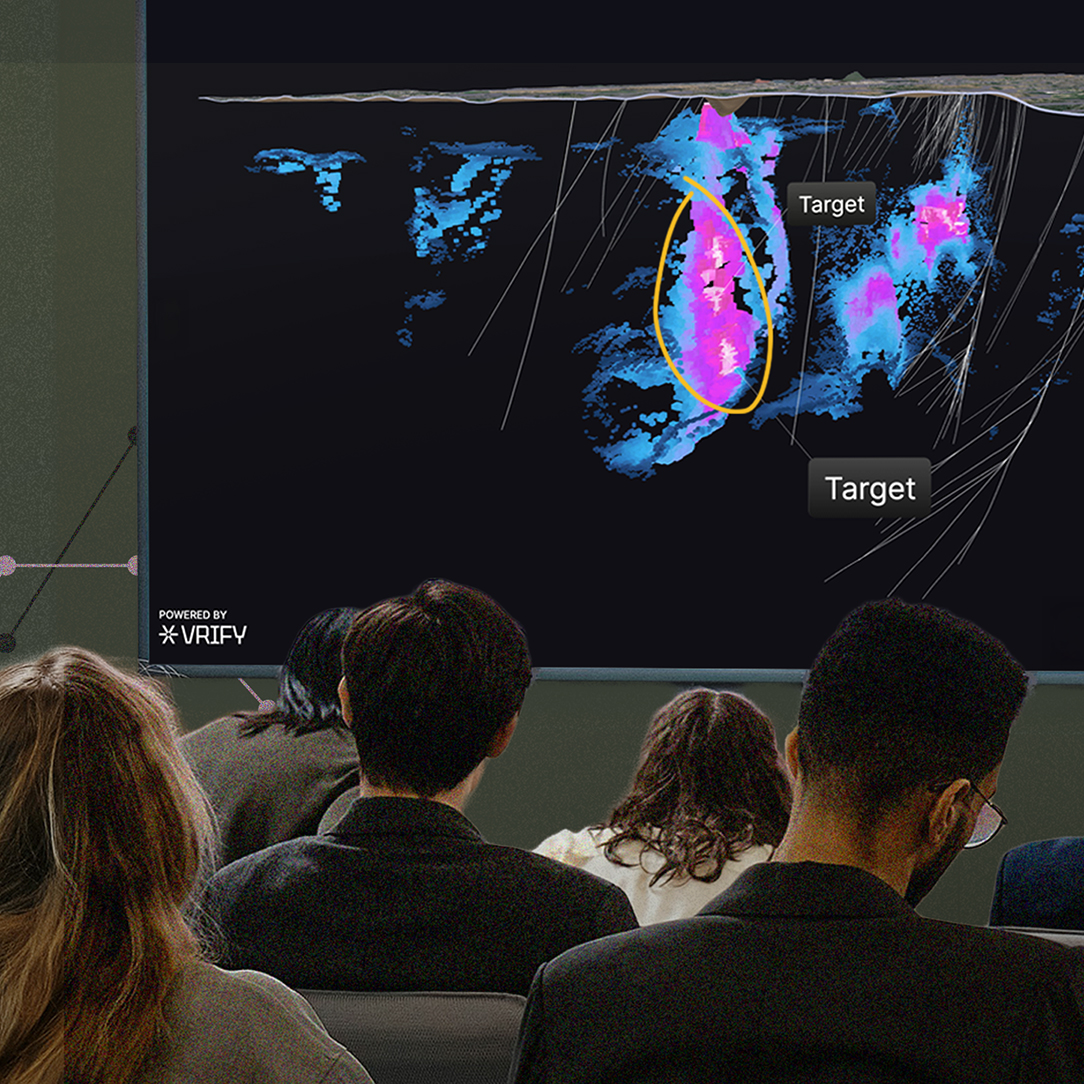
AI tools are increasingly being applied in mineral exploration to process complex datasets and identify areas of mineral potential that may not be apparent through conventional analysis. Their value is especially relevant when datasets are numerous or sufficiently disparate that systematic evaluation within a single interpretive workflow becomes impractical under typical project timelines.
For geoscientists, this capability depends on transparency in the underlying analysis. Many AI systems offer limited visibility into how a result was generated. Without a way to interrogate the basis for a given result, there is no reliable means of judging whether the model response reflects a plausible geological control or a modelling artifact. This opacity can undermine confidence in applying AI outputs to exploration decision-making.
DORA, VRIFY’s AI prospectivity mapping software, is designed around transparency and interpretability, keeping the geoscientist in the loop. Its outputs show model behaviour and the datasets driving each target, while the iterative workflow allows geological hypotheses to be refined as project understanding evolves.
How DORA Works
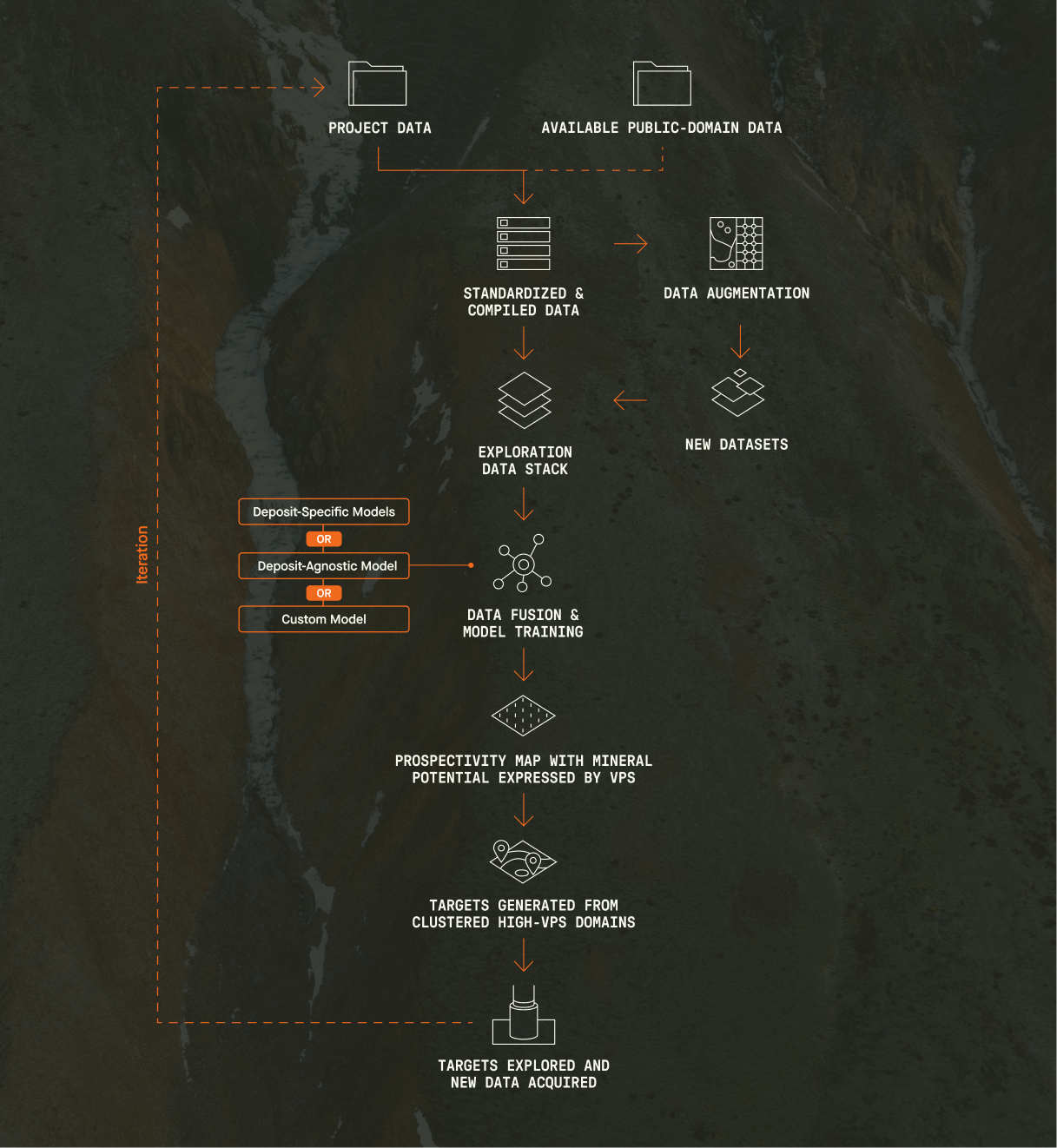
The process begins with data compilation. Project-specific vector and gridded data is standardized and unified for interoperability, with relevant public-domain datasets integrated where available. Selected inputs can then pass through a proprietary augmentation process that derives additional layers to expand geological and spatial context, with generation parameters available for inspection. These new datasets are combined with the original grids to form an exploration data stack for modelling.
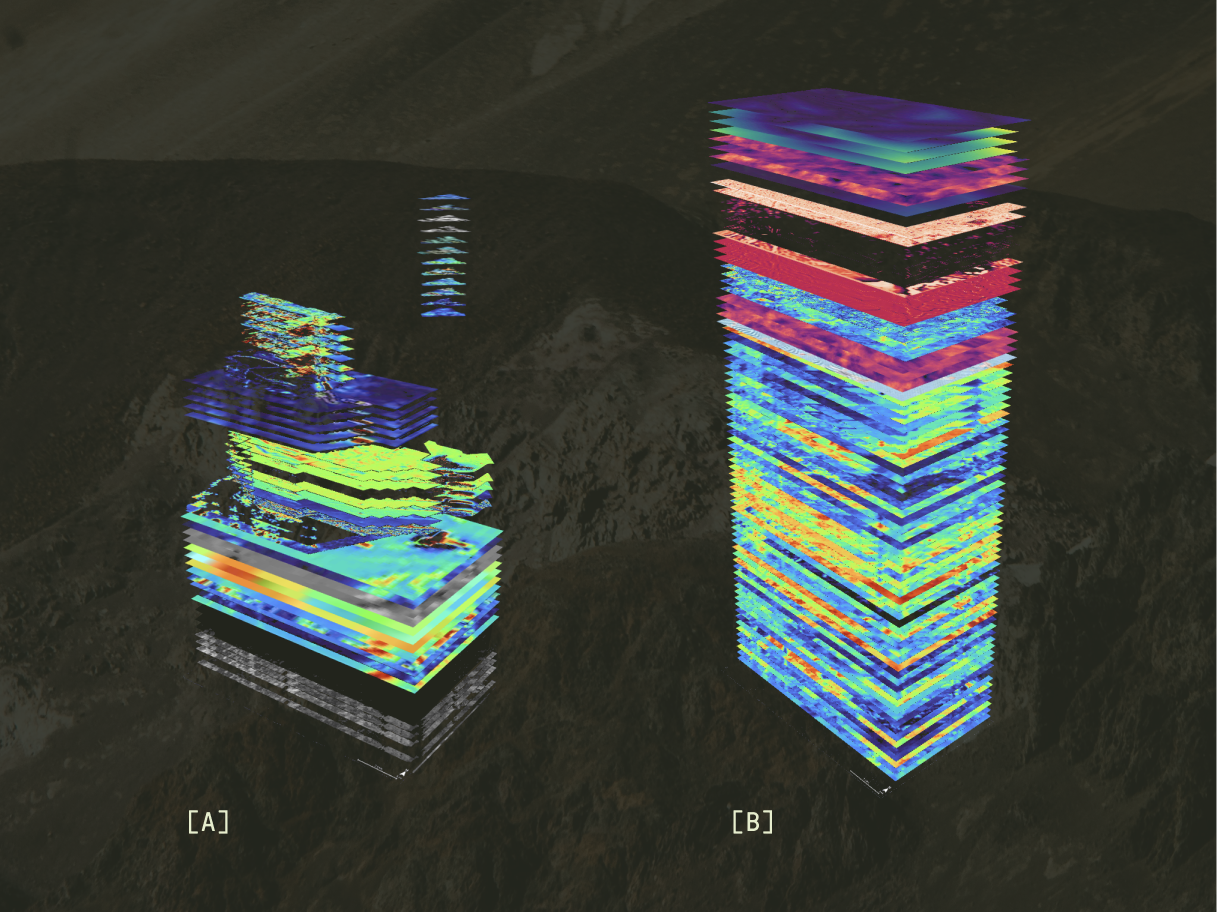
Data fusion and model training are carried out using the configuration best suited to the project. DORA includes 11 Foundation Models, which are deep learning models pretrained on large mineral-system datasets. This suite comprises 10 deposit-specific models for projects with well-constrained deposit types and one Deposit-Agnostic Model that accommodates a wide range of common mineralization styles. For atypical or uncertain deposit systems, a Custom Model can be built from a specific project’s own available exploration data. Known mineralization examples are used with the prepared exploration data stack to train the selected model and recognize patterns associated with prospectivity across the area of interest (AOI).
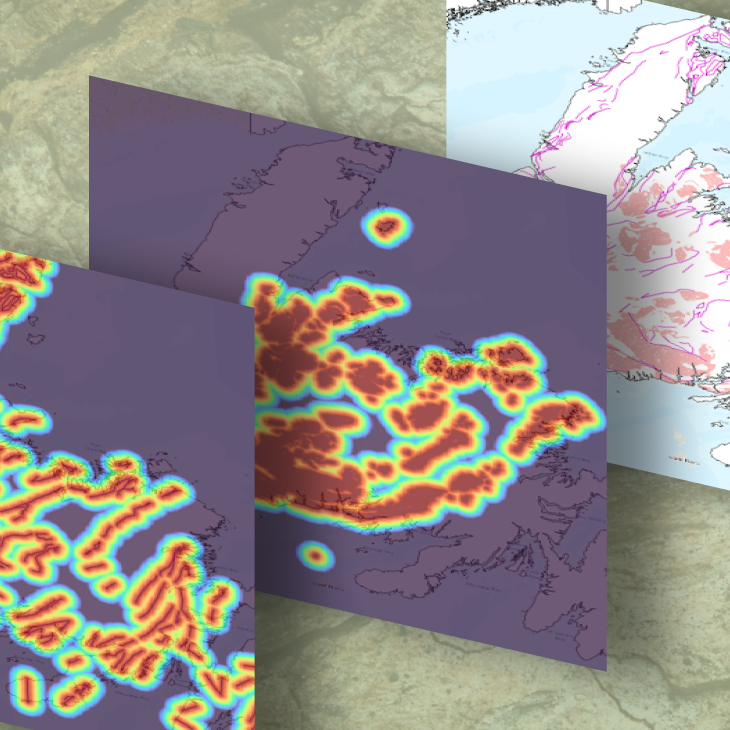
Following model training, DORA generates a prospectivity map in which mineral potential is expressed as a VRIFY Prospectivity Score (VPS), with higher values suggesting greater likelihood of mineralization. High-VPS domains are clustered into targets to support exploration strategy and prioritization. As new data becomes available, the workflow can be rerun so that the outputs reflect the updated project dataset.
How DORA Makes Results Interpretable
DORA’s interpretability is built into the outputs produced after each model run. The prospectivity map is accompanied by diagnostic information that allows geoscientists to examine what contributed to the result.
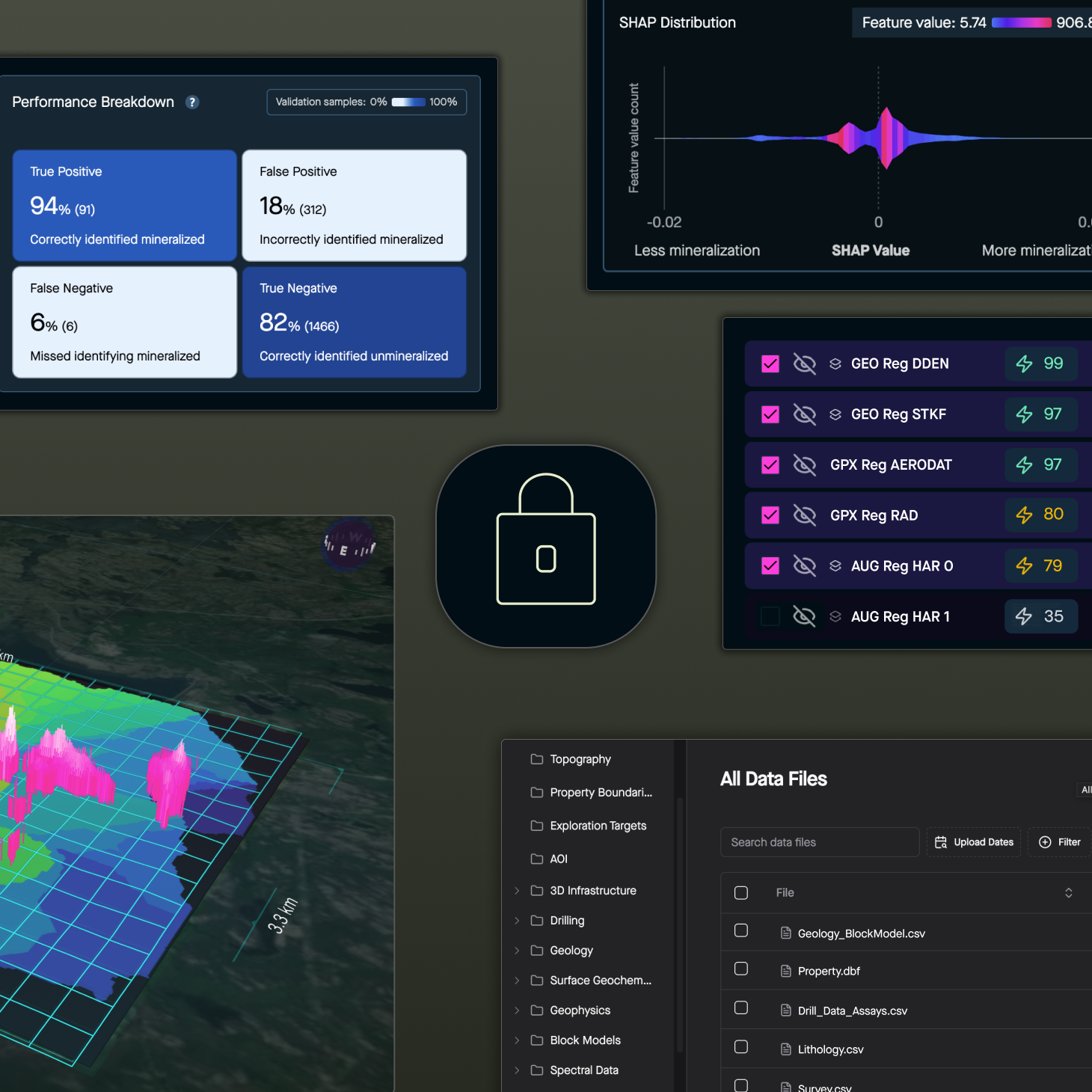
Model performance is the first checkpoint. Accuracy metrics and a confusion matrix show how well the model distinguished known mineralization from locations selected as non-mineralized training examples. These measures are produced through spatial cross-validation, a hold-out testing approach in which training points are divided into clusters and one cluster is withheld during each simulation. The model is then evaluated against points not used directly in training.
The next step involves investigating the relative influence of each input layer. DORA ranks datasets by their percentage contribution to the modelled result, a measure referred to as Model Feature Importance. If a lineament density layer derived from magnetic data ranks highly, for example, the geoscientist can assess whether its spatial pattern is compatible with the structural setting of known mineralization in the AOI. Each layer can also be visualized against training data points to examine its spatial relationship with known occurrences directly.
At a target VPS cluster scale, SHAP values, or Shapley Additive Explanations, show whether lower or higher values, or non-monotonic combinations, within a dataset contributed positively to individual targets. This provides more detailed attribution for evaluating the model response at the input level.
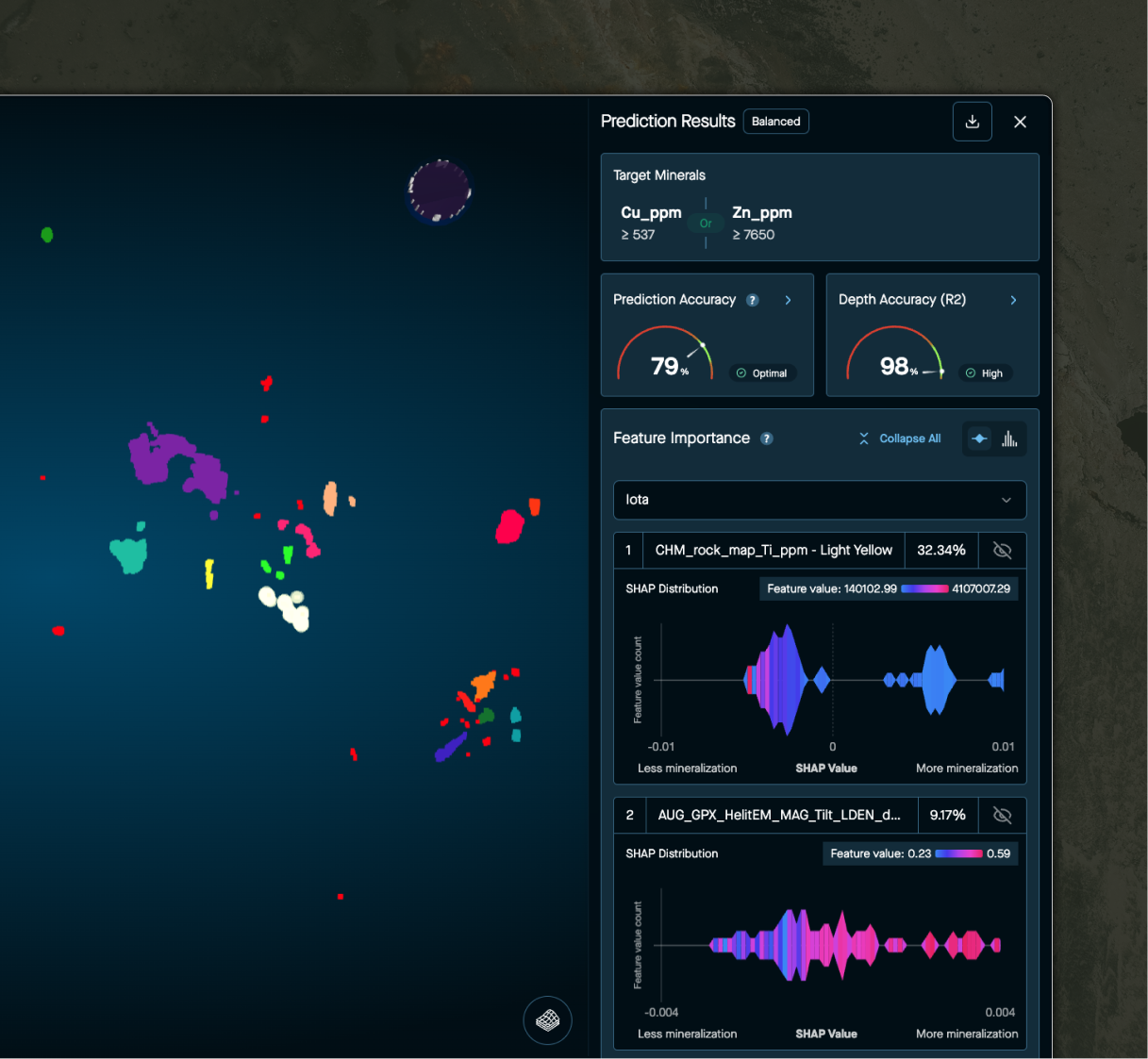
Each target is characterized through the SHAP plots and may differ from the result across the broader modelled area. Examining how the influential layers for an untested target compare with those associated with known mineralization, combined with the target’s average VPS, gives the exploration team a structured framework for prioritization. The same review can reveal datasets not previously linked to mineralization or identify coverage gaps that may warrant additional survey work before a target is advanced.
If an influential layer is difficult to justify geologically, the experiment can be rerun without it to test how sensitive the result is to the input. When the layer is derived from other datasets, its source data and processing history can be considered as part of the interpretation. A practical approach is to start with more objective datasets with continuous coverage, such as baseline geophysical grids, before progressively introducing derived products and observing how the output changes. This helps account for the uncertainty that interpretation-derived inputs may add to the analysis.
From Modelling to Decision
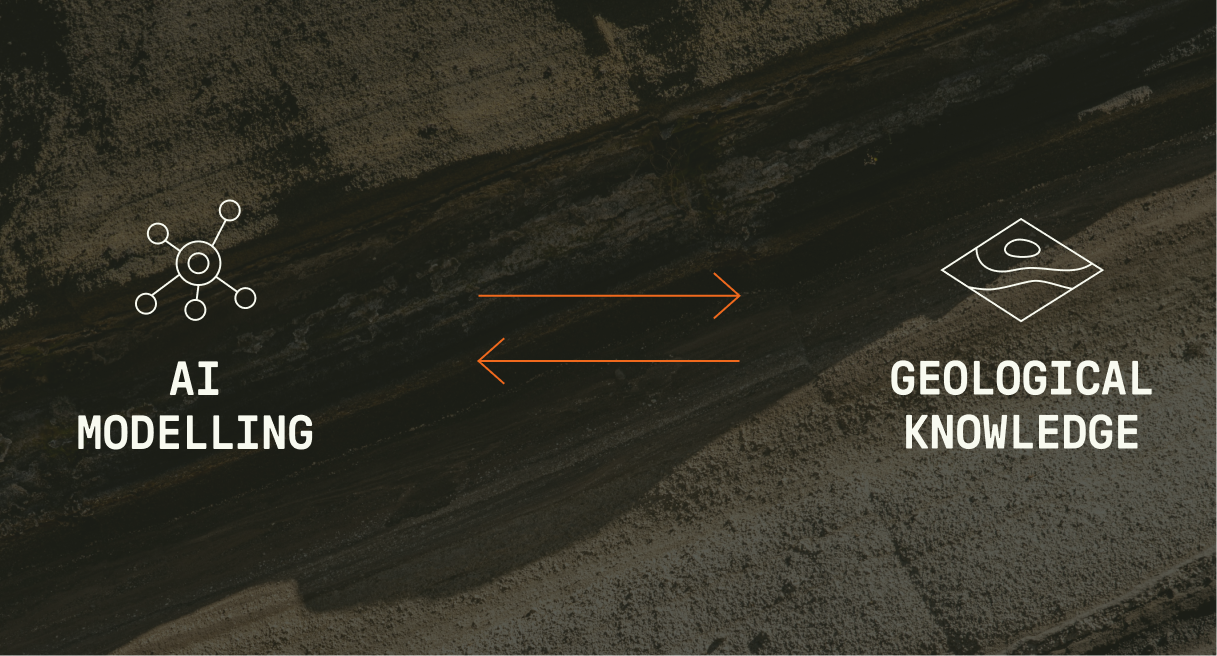
DORA’s transparent workflow enables a two-sided audit between AI prospectivity modelling and mineral systems thinking. AI modelling is probabilistic and spatially driven. In contrast, mineral systems thinking is causal and process-based, grounded in how mineralization forms. The strength of this pairing is reciprocal. Geological knowledge helps evaluate DORA’s inputs and output against the mineral system, while DORA can surface patterns that challenge or build on the existing interpretation.
Recent exploration outcomes illustrate what this reciprocal process can make possible. At Valentine, DORA supported Equinox Gold’s reassessment of underexplored ground beyond the primary structural corridor hosting the known deposits. The work helped re-rank regional priorities and strengthened the target status of an area later named the Minotaur Zone, where follow-up sampling supported a drill program that confirmed a new high-grade gold system. At Griffon, Nevada Sunrise used DORA to evaluate gold potential outside historically mined areas, with the resulting targets shaping a field program ahead of drill planning. In both cases, DORA’s interpretability allowed modelled prospectivity to guide the next stage of exploration rather than remain a separate analytical exercise.
<hr />
In mineral exploration, AI outputs become decision-relevant only when geoscientists can analyze them in geological terms. Transparency and interpretability are what allow modelled prospectivity to move from a standalone result into exploration planning and drilling.
To learn more about DORA’s auditable modelling workflow or the broader VRIFY Predict suite for mineral exploration, book a demo with our Geoscience Team.
.png)
.png)
.png)


.jpg)

.png)