Critical minerals and metals are no longer just an economic asset — they are a strategic necessity. As electrification and the energy transition accelerate, supply chain security has risen on the global agenda. Many countries are under mounting pressure to strengthen domestic exploration and resource development capacity rather than depending on foreign sources. For mining and exploration, this has created a new reality: deliver more with less, and do it faster than ever before.
A Structural Talent Shortage Years in the Making
Just as demand for critical minerals and metals is reaching new heights, the industry is confronting a talent shortage on two fronts.
A Decline in New Entrants
Student enrolment in geoscience and mining-related programs has been falling for years across regions like North America and Australia. In Canada, for example, the Mining Industry Human Resources Council reports that undergraduate enrolment in mining engineering programs dropped from more than 1,400 students in 2014 to about 800 by 2020 — an approximately 43% decrease. Between 2016 and 2020, the number of undergraduate students entering earth sciences or geosciences declined by 10% annually, the poorest growth among Canada’s physical science disciplines. Similarly, a 2022 report to the Australian Geoscience Council notes that about 41% fewer undergraduate students chose geoscience programs over the 2013–2021 period.
This trend reflects a set of institutional pressures that has been building over time. Reduced university funding has weakened a number of geoscience departments, limiting their ability to retain faculty with orebody expertise and support specialized training. The same budgetary constraints have led many institutions to scale back field schools and other practical experiences that have traditionally made geoscience tangible and compelling as a career path. Teaching expertise has also become increasingly concentrated in a small number of programs, leaving many prospective students with fewer options and, in some cases, the added burden of relocating to access the right education.
A Hollowed Mid-Career Layer
Further down the career track, experienced professionals who would normally anchor exploration projects and carry institutional knowledge forward are in severely short supply, a concern that surfaced repeatedly at the 2026 Prospectors & Developers Association of Canada (PDAC) Convention. Less visible than declining enrolment, this dimension of the shortage carries more immediate consequences. These geoscientists are typically the ones who make the critical technical calls, from target prioritization to drill decisions, and their scarcity is felt directly in how companies plan and execute exploration programs.
This is not a recent development either. Long and uneven industry cycles, combined with persistent difficulty for junior explorers to access capital, have created irregular talent pools and development, resulting in gaps in the cohort that would otherwise be at the height of its career today. The COVID-19 pandemic compounded the damage. Training was interrupted, and on-site exposure diminished at a moment when the pipeline was already fragile.
What AI Can Do in the Short Term
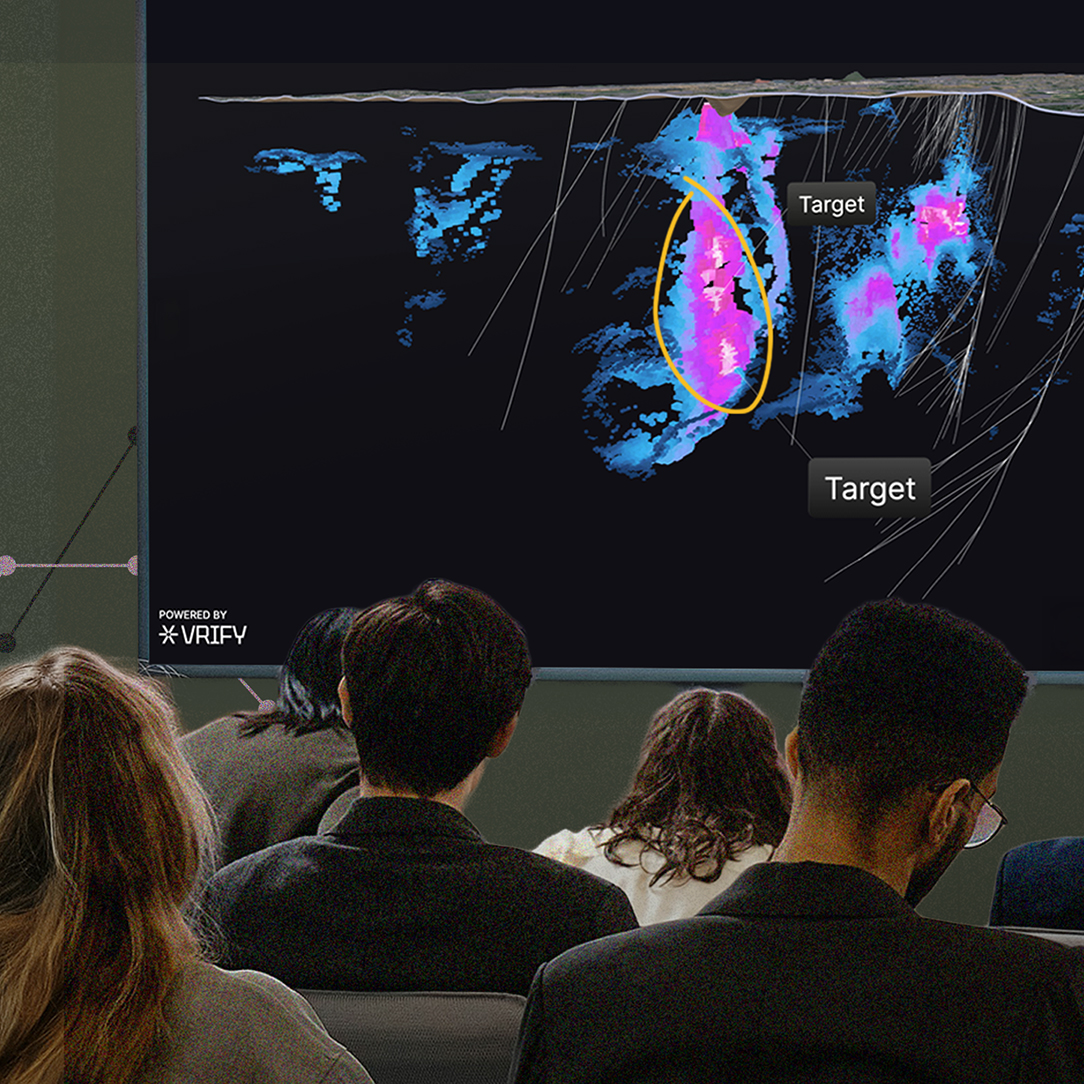
While the talent pipeline cannot be rebuilt overnight, AI can help ease some of the operational pressure that comes with a thin bench of experienced geoscientists. By reducing repetitive manual work, AI frees up technical leaders to focus on interpretation and higher-value decisions so their expertise can be applied where it matters most. This is particularly valuable in an environment where teams cannot quickly add people to support critical decision-making.
At the same time, AI still depends on human judgement. This is sometimes referred to as the geologist-in-the-loop approach, where geoscientists remain actively involved in guiding and evaluating AI outputs rather than simply accepting them. AI is an amplifier of expertise, not a substitute for it, which is precisely why the talent shortage cannot simply be engineered around. The people still need to be there.
What the Industry Must Do for the Long Term
Closing the workforce gap at its source will require the mining and exploration industry to take a more active role in rebuilding the geoscience talent pipeline through stronger collaboration with academic institutions that teach the foundational geological disciplines.
That starts with helping students understand both the reality of geoscience careers and the preparation those roles require. Field schools, internships, co-op placements, guest lectures, and other industry-supported programs can all bring that reality into view much earlier. Universities also benefit from closer industry input on curricula, helping ensure graduates are better prepared for the demands of the industry. Initiatives like UBC’s geoscience course sponsored by SRK Consulting and other industry collaborators, as well as VRIFY’s annual student challenge, show how these partnerships can take shape and succeed in practice.
There is also a broader opportunity to reposition mining and exploration, along with the geoscience behind them, for prospective students. The industry’s growing embrace of AI and advanced analytical tools is more than a practical response to labour constraints. It is spurring a fundamental shift in how work gets done while accelerating innovation across core processes. That points to an industry evolving quickly and offering a career path far more dynamic and compelling than the static, low-tech image that still defines it for many new graduates. In the past, the technology sector drew some of its best minds by making its innovation and impact visible. Mining and exploration should do the same.
The long-term goal is a stronger pipeline of geoscientists with the field fundamentals and digital literacy needed not only to thrive in a modern, data-driven environment, but also to help shape where the industry goes next.
<hr />
The mining and exploration talent shortage is a strategic challenge, not a temporary labour issue. Responding to it means working on two timelines at once. AI can help the sector make better use of the talent it has today. Over the longer term, deeper collaboration with academic institutions, coupled with a more deliberate effort to showcase continued advances in modern mining and exploration practice, will be essential to strengthening the industry’s future workforce.
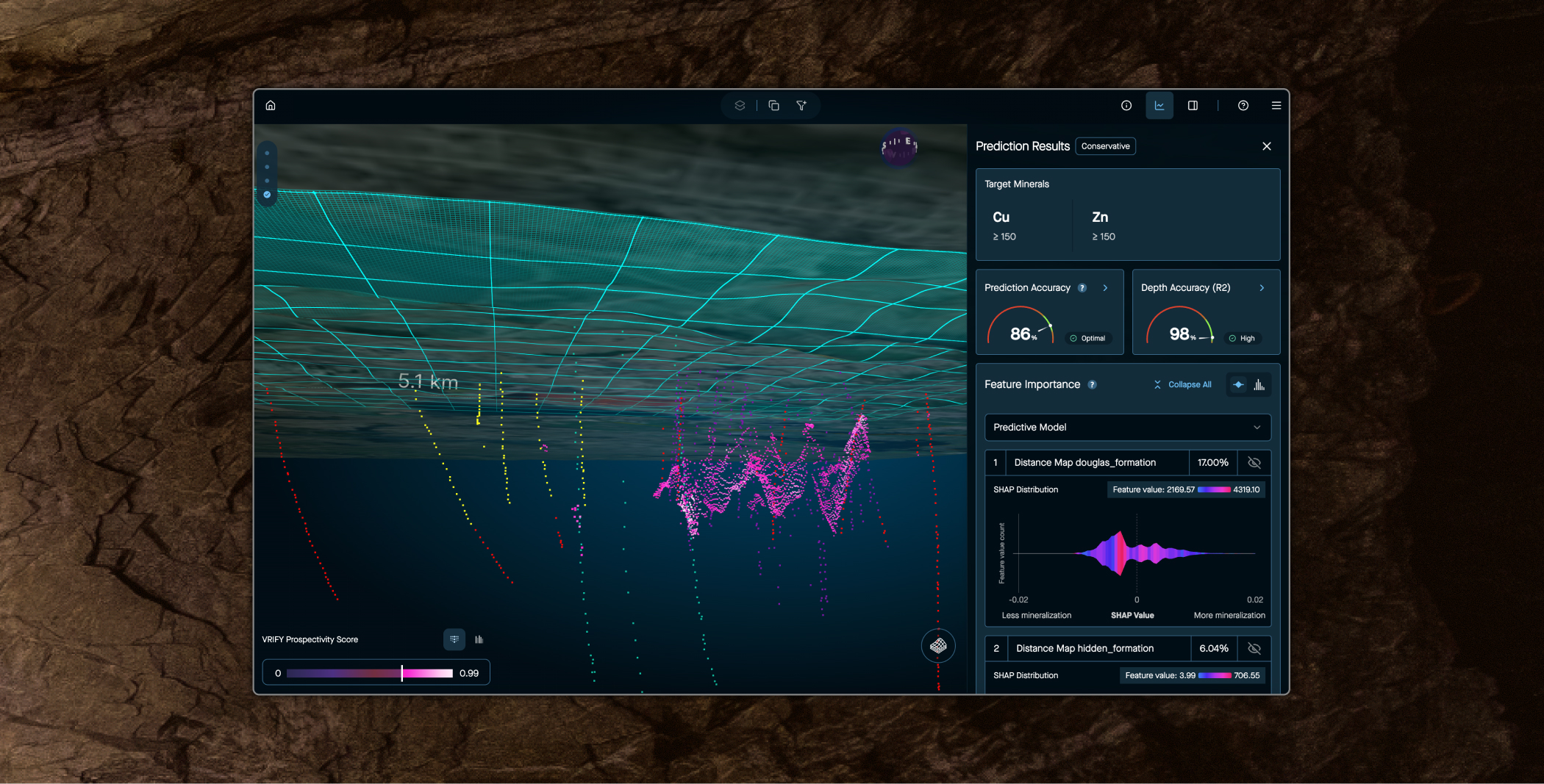
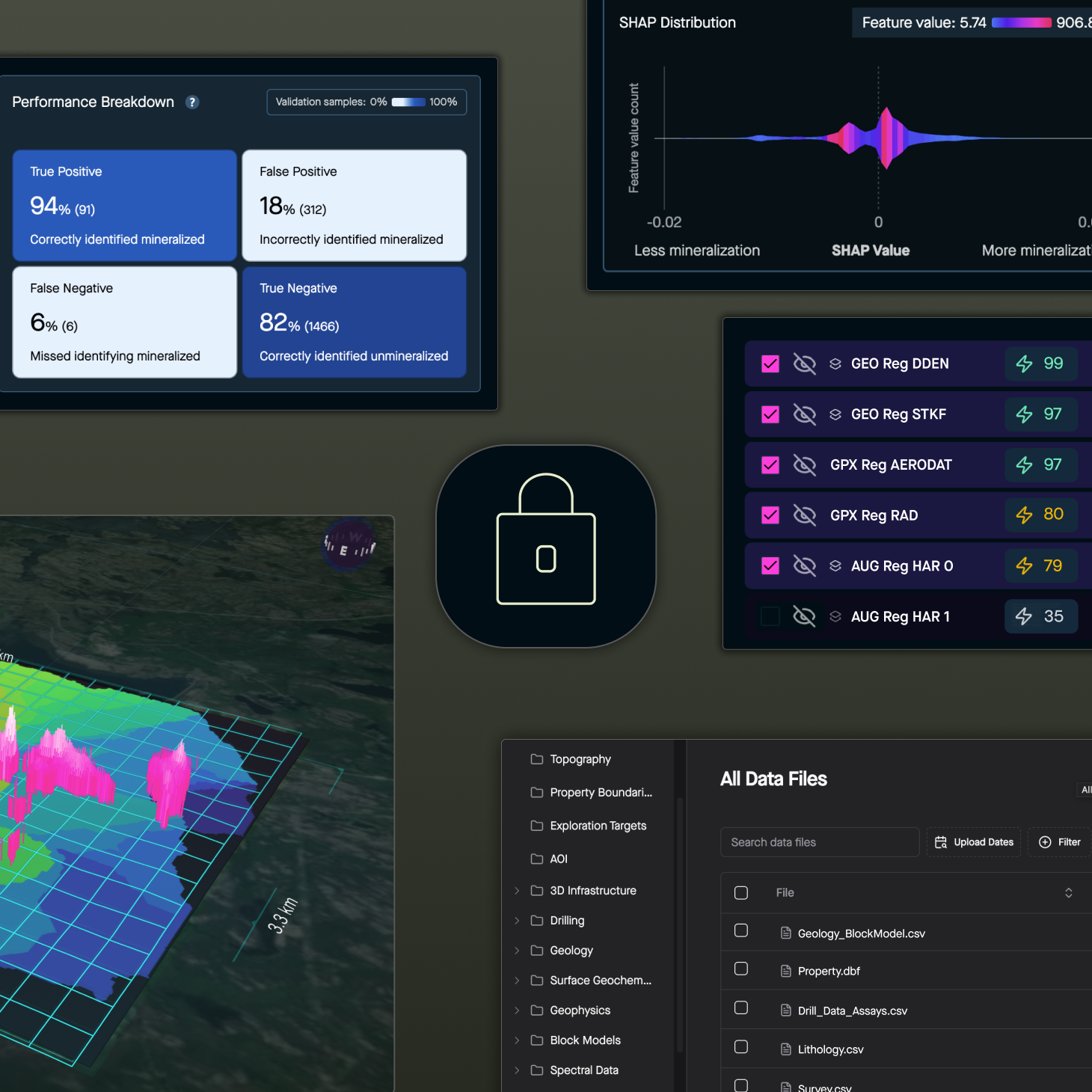
To see how purpose-built AI prospectivity mapping software DORA, part of the VRIFY Predict product suite, can extend the reach of your team, book a demo with our Geoscience Team.
.png)
.png)
.png)



.jpg)

.png)